




Professional scenic production can transform an ordinary commercial environment into a memorable and highly engaging experience. Businesses use scenic environments for corporate events, product launches, trade shows, exhibitions, promotional activations, conferences, and large outdoor gatherings. A parking lot, convention center, exhibition hall, or corporate campus can all become part of a carefully designed visual experience when the right planning and production process is followed.
However, successful scenic production requires more than creative ideas. It involves careful coordination between design, technology, materials, fabrication, transportation, installation, safety, and event operations. Planning each stage in advance helps businesses achieve an environment that looks impressive while remaining practical and reliable.
Start With Clear Production Objectives
The first step in planning scenic production is defining what the business wants to accomplish. The scenic environment should support a specific purpose rather than simply adding decoration to a location.
For example, a company launching a new product may want a visually striking stage and branded presentation area. A business hosting a corporate conference may need an environment that reinforces its professional identity. An outdoor promotional event in a parking lot may require entrance structures, temporary stages, branded displays, audience areas, and directional features.
Understanding the purpose helps the production team determine the appropriate scale, design, technology, and materials.
Evaluate the Commercial Venue
Every location has different characteristics that can affect scenic production. A convention center may have loading restrictions, ceiling limitations, rigging requirements, and strict installation schedules. An exhibition hall may require careful coordination with other exhibitors. Outdoor commercial spaces such as parking lots can introduce additional considerations involving weather, power, vehicle access, pedestrian movement, and temporary flooring.
A professional production team should inspect the venue before finalizing the design. Measurements, access points, existing structures, electrical locations, audience capacity, and installation conditions should all be considered.
This information allows the creative concept to be developed around the actual environment rather than creating a design that becomes difficult to install later.
Develop the Scenic Concept
Once the venue and objectives are understood, the creative team can begin developing the scenic concept. This stage determines how the environment will look and how audiences will experience it.
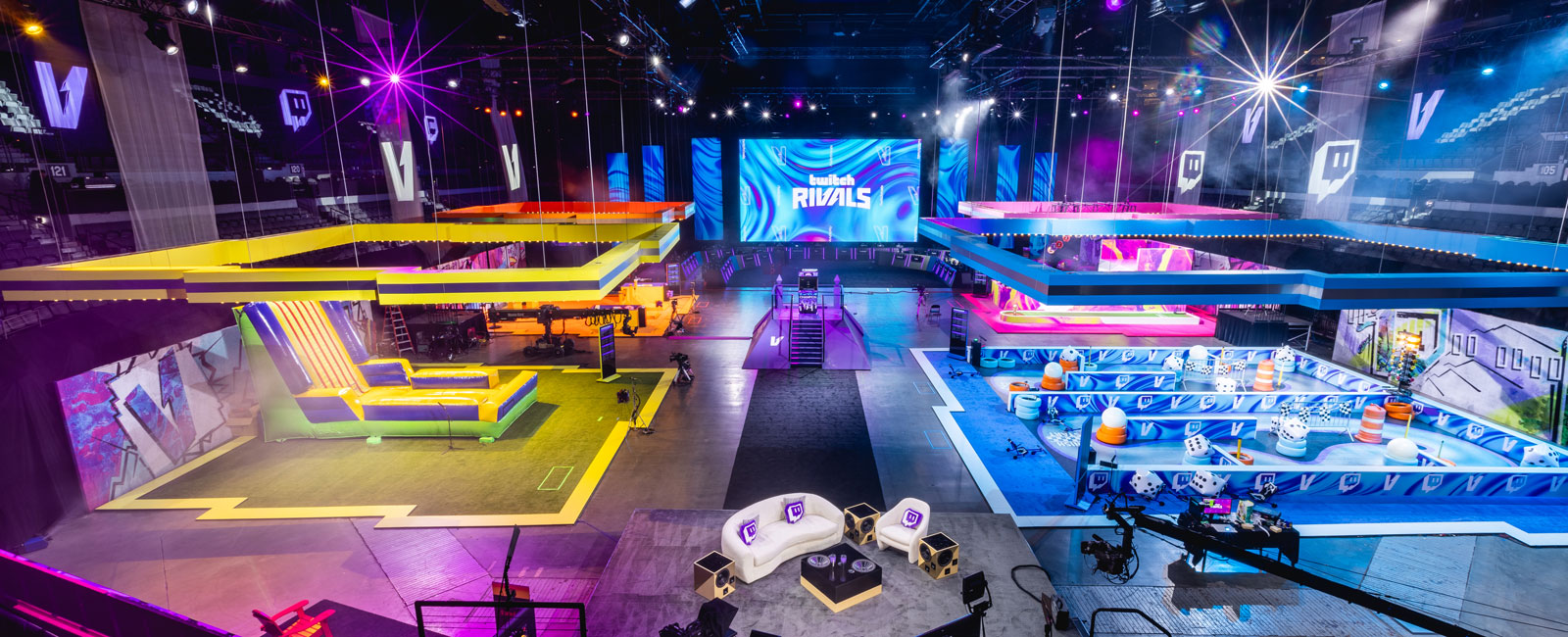
The design may include stages, scenic walls, entrance portals, display structures, platforms, towers, branded architectural elements, lighting features, and digital screens.
Professional scenic fabrication turns these concepts into physical structures that can be manufactured and installed in the selected commercial location. Designers and production specialists need to work together to make sure that creative features are realistic, durable, and appropriate for the venue.
A good concept should also consider how people move through the space. Entrances, presentation areas, displays, seating zones, and interactive installations should have logical relationships that make the environment easy to navigate.
Plan Materials and Construction
Material selection is another important part of scenic production. The materials need to support both the appearance and practical requirements of the project.
Indoor installations may prioritize lightweight components and efficient assembly. Outdoor commercial projects may require materials and finishes capable of handling changing weather conditions. Large structures may also need additional reinforcement depending on their size and location.
Modular construction can be especially useful for businesses that participate in multiple events. Scenic elements can be designed to be assembled in different configurations, allowing the company to reuse components at conferences, exhibitions, promotional events, and corporate gatherings.
Careful planning at this stage can improve efficiency and help reduce unnecessary production costs.
Integrate Technology Into the Environment
Modern scenic production frequently combines physical structures with digital technology. LED walls, projection systems, interactive displays, programmable lighting, and digital signage can significantly increase audience engagement.
Technology should be incorporated into the scenic design rather than treated as an afterthought. For example, an LED display can become part of a stage structure, while lighting can highlight architectural features or direct attention toward a product presentation.
At a parking lot event, digital screens can provide branding and information while illuminated structures create a strong visual identity after sunset. In an exhibition hall, interactive technology can help attract visitors to a company’s display area.
The goal is to create a cohesive environment in which physical and digital elements support one another.
Consider Branding and Visual Consistency
Businesses often use scenic production as an extension of their brand. Colors, logos, typography, messaging, textures, and architectural forms can all be integrated into the environment.
However, effective branding does not mean covering every surface with a logo. Professional scenic design focuses on creating a balanced environment where branding feels natural and memorable.
For example, a corporate conference might use subtle branded scenic walls, a distinctive stage design, coordinated lighting, and digital content. A product activation could use a dramatic entrance structure that immediately communicates the identity of the company.
Consistent visual details can make the entire environment feel intentional and professionally produced.
Build a Detailed Production Schedule
Timing is critical in commercial scenic production. Multiple teams may need to coordinate design approvals, material procurement, fabrication, transportation, installation, technology setup, testing, and event operations.
A detailed schedule should identify important deadlines and responsibilities. Design approval needs to happen early enough to allow sufficient production time. Fabrication should be completed before transportation is scheduled, while installation should allow enough time for testing and adjustments.
Professional scenic fabrication also requires coordination with transportation and installation teams. Large scenic elements may need specialized handling, carefully planned loading procedures, and appropriate access to the venue.
Planning these details early reduces the risk of last-minute complications.
Prioritize Safety and Installation Requirements
Safety should remain central throughout the entire scenic production process. Structures need to be designed and installed according to applicable venue requirements and professional standards.
Installation teams should consider structural stability, audience movement, electrical connections, equipment placement, emergency access, and environmental conditions.
Outdoor business events require additional planning for changing weather conditions. Temporary structures should be evaluated carefully, and contingency plans should be prepared when environmental conditions could affect the installation or event.
Safety planning protects audiences, staff, equipment, and the business’s investment in the production.
Work With an Experienced Production Partner
Businesses can simplify complex scenic projects by working with experienced production professionals. A capable team can coordinate design, fabrication, technology, logistics, and installation while keeping the original creative vision in focus.
Show Ready is an example of a company associated with professional scenic production solutions. Working with an experienced partner can help businesses identify practical challenges early, coordinate multiple production disciplines, and maintain consistency from the initial concept through final installation.
The right production partner should understand both creative requirements and the operational realities of commercial venues.
Prepare for Installation and On-Site Coordination
The final production stage requires careful on-site coordination. Scenic components must arrive at the right time, in the correct sequence, and with the necessary equipment and personnel.
Professional scenic fabrication is most effective when the fabrication process is closely connected to installation planning. Components should be clearly organized, labeled, and prepared for efficient assembly.
On-site teams may also need to coordinate with venue managers, electricians, audiovisual technicians, event staff, and other contractors. Clear communication can help prevent delays and ensure that every element is installed according to the approved design.
Review the Finished Environment
Before the business event begins, the entire scenic environment should be inspected. Teams should check structures, lighting, digital displays, branding, pathways, presentation areas, and other important elements.
This final review provides an opportunity to identify issues before audiences arrive. Small adjustments can make a significant difference to the overall experience.
For businesses investing in professional scenic production, the finished environment should achieve three goals: support the purpose of the event, communicate the brand effectively, and provide a safe and engaging experience.
Conclusion
Planning professional scenic production requires a balance between creativity and practical execution. From defining objectives and evaluating a commercial venue to developing designs, selecting materials, integrating technology, coordinating fabrication, and managing installation, every stage contributes to the final result.
Professional scenic fabrication helps turn creative concepts into physical environments that can transform convention centers, exhibition halls, corporate campuses, parking lots, and other commercial spaces.
With careful planning and an experienced production team such as Show Ready, businesses can create visually compelling environments that capture attention and support their broader event objectives. When design, technology, fabrication, logistics, and safety are coordinated from the beginning, scenic production becomes a powerful tool for creating memorable professional experiences.